DIY Marine Canvas Projects: How I Made Sail Bags and a Bimini (and Survived)
Great success is built on failure, or sew it seams…
A few seasons ago, my winter included taking on about a thousand sailboat projects, among them making our own sail bags and a new bimini for our 35-foot sailboat: Mutiny. I started with absolutely zero experience and eventually reached a level of competence I will charitably describe as “a modest hero.”
While the journey involved plenty of frustration, there was also a massive amount of learning. That is the reality of tackling large marine canvas projects while living aboard a sailboat.

Planning a DIY Marine Canvas Project
Before I could touch a needle, I had to research everything. I needed to learn about needles, UV-resistant thread suitable for the Caribbean sun, the best fabric choices for a bimini, and the proper way to construct and stitch seams. Most importantly, I spent a lot of time wondering what I was doing.
I spent weeks planning before I ever cut into expensive fabric. Resources like Sailrite’s DIY and sewing tutorials were absolute lifesavers, I would have been completely lost without them. Their videos explain materials, planning, and techniques in a way that actually makes sense when you are sitting on a boat staring intimidated at a massive amount of canvas material.
If you’re planning your own marine canvas or sewing project, it is worth doing the research before you start cutting. Choosing the right fabric, thread, needle and construction method beforehand can save a lot of frustration later.
Pro tip: If you’re planning your own marine canvas or sewing project, you can explore Sailrite’s tutorials, project resources and supplies here:
Affiliate disclosure: This is an affiliate link. If you make a purchase through it, the Mutiny Crew may earn a small commission at no extra cost to you.
Can You Use a Domestic Sewing Machine for Marine Canvas?
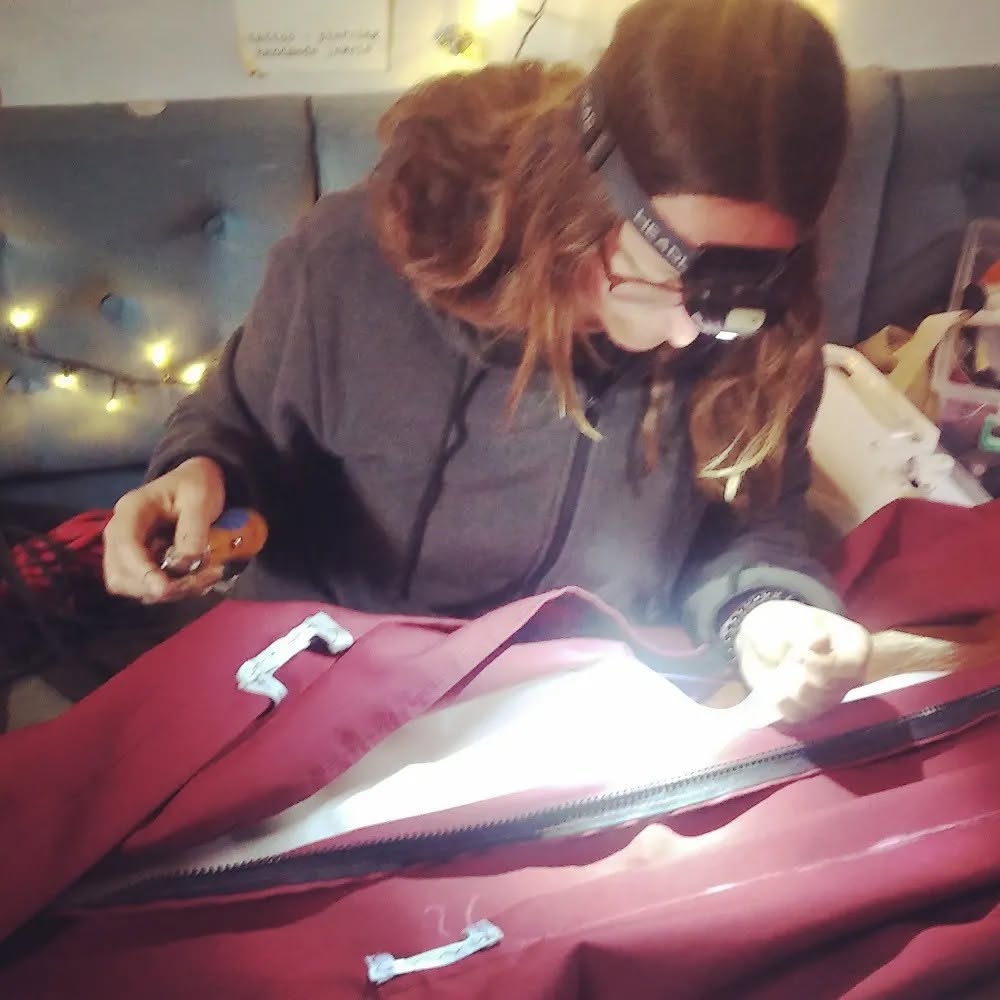
I used a domestic Singer sewing machine, and I can tell you right now that a home machine does not magically transform into a heavy duty industrial canvas tool just because you really need it to.
Once you try to feed multiple layers of thick marine fabric through a standard machine, things go downhill fast. You end up abusing the thread, the needles, and the machine itself. Eventually, you realize you should have bought an industrial machine. Those are expensive, but worth their weight in gold.
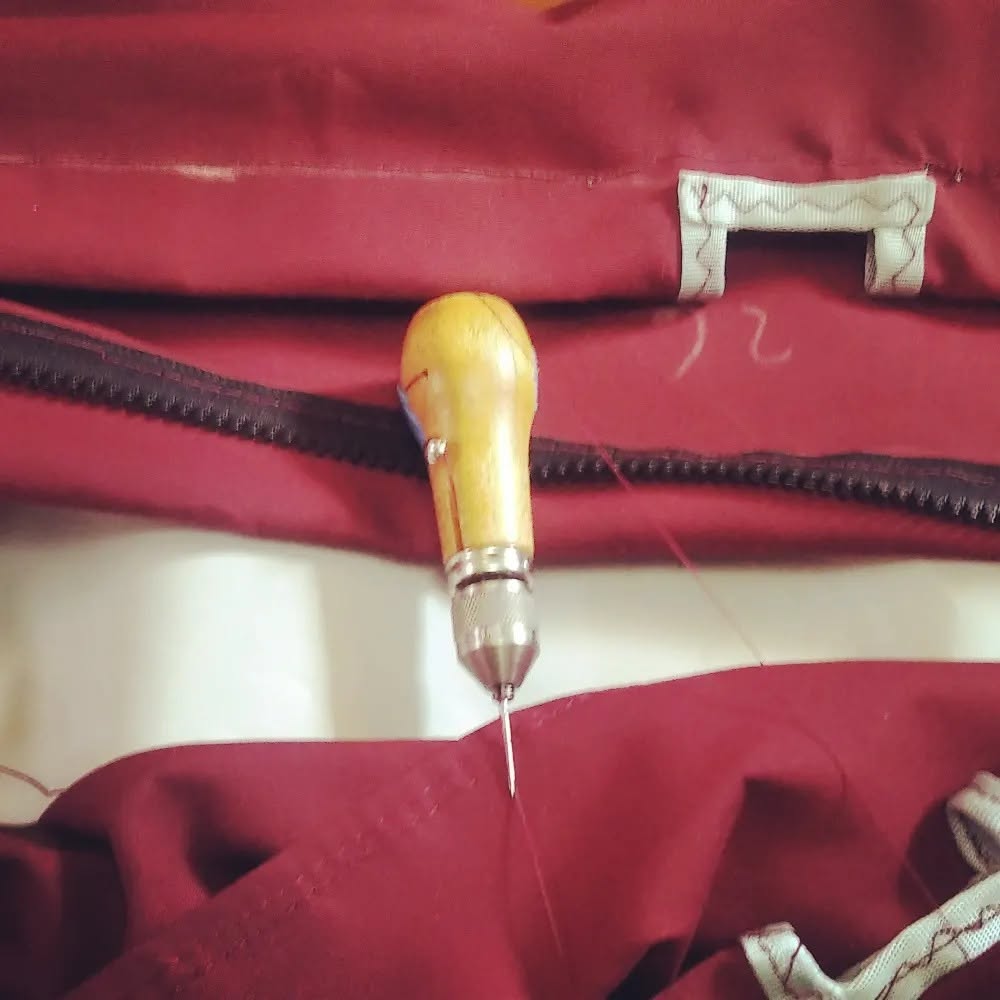
By the time I realized this, I had already damaged my domestic Singer and a fair amount of thread, so I turned to hand stitching. Luckily, I had bought a Speedy Stitcher a few months earlier. Hand stitching is incredibly time-consuming, but without it, I doubt these projects would have been possible with the limited gear we had aboard Mutiny.
One of the less convenient parts of living aboard is that you don’t have the perfect workshop or the perfect tools. You just have to improvise.
The Reality of Making Sail Bags While Living Aboard
We got a quote from a local upholstery shop, which came in at around €1,500. We completely understand that professional marine canvas work is expensive and craftsmanship has value, but when you live aboard and are managing a strict boat budget, €1,500 is a significant amount of money. That’s one of the realities of budgeting for life aboard: the cost of owning a sailboat doesn’t stop once you’ve bought the boat.
So, I decided to do it myself. Apparently, I enjoy suffering. (this isn’t the first time, I realise this…)Sewing a four-meter sail bag inside a three-meter saloon was a massive challenge. I transformed the interior of Mutiny into a combination of:
- A sail loft
- A sewing workshop
- A fabric warehouse
- An obstacle course
- Occasionally, a place where we could actually sleep
The entire process involved moving items constantly to wrestle the fabric into place. This created a new problem: I would constantly misplace tools because I had just moved them under a three-meter pile of sail bag. My fingers also suffered, as I learned that pushing needles through thick material is not particularly kind to exposed fingertips.
DIY Sail Bags and the Design Mistakes I Made
I also made a design error. Of course I realized too late that I should have designed the sail bag differently because our new sails at the time were loose-footed (the old ones were attached to the boom via slugs). Our sailmaker only thought to mention this after the bimini and sail bags were already finished. Jeez.
It was a chore, and I failed repeatedly. I had to redo sections, poked myself repeatedly with needles, and rearranged the 5 meter long marine fabric hundreds of times in our way smaller saloon. But eventually, the work was finished. The bimini and sail bags actually looked like the way they were supposed to. Hopefully, they will hold up in a strong gust of wind.
Because a DIY Boat Project Is Never Really Finished
It wasn’t completely over, though. Because it’s a DIY project, it wasn’t officially finished until I had to take it apart again.
Sew far:
- One grommet has already failed.
- The sail bag has to come out again because I forgot to include a zipper for the reefing lines.
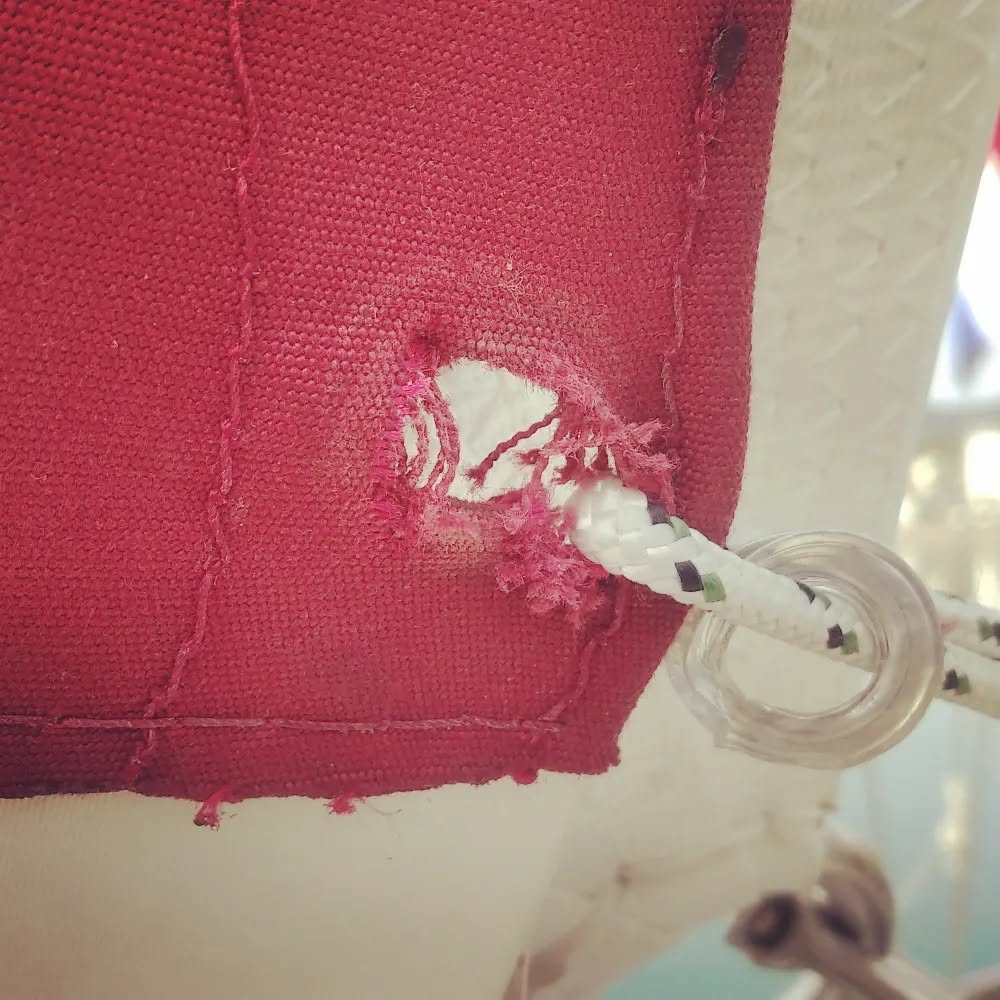
Which is probably a fairly accurate summary of boat maintenance in general: you finish a job, realize you should have done differently, and then immediately take it all apart again.
What I Learned From my DIY Marine Canvas Projects
I would still recommend doing these projects yourself, not because they are easier, but because you gain a new skill to use aboard. You understand the materials and tools better, which makes the next project less daunting. Also you learn where your own limits are, which can be equally useful information.
If I started today, I would spend much more time planning before making any cuts. Before you start your own bimini, sail cover, sail bags, hatch covers or cockpit cushions, do the research first. It can save you from learning everything halfway through the project, which is exactly how I did it.
Questions Worth Answering Before You Start
Before starting a marine canvas project, make sure you understand:
- Which marine fabric is suitable for your project?
- What type of thread offers good UV resistance?
- Which needle do you need?
- How should the seams be constructed?
- Can your sewing machine handle the material?
- How much space do you actually need to make the project?
That last one is particularly important if you live aboard a 35-foot sailboat.
Useful Resources for DIY Sailboat Projects
One of the things I genuinely found useful while figuring out our own bimini and sail bags was Sailrite’s collection of tutorials and DIY resources. If you’re planning a project involving marine canvas, sail bags, upholstery, covers or other sewing projects aboard your boat, their resources are worth exploring before you start.
👉 Explore Sailrite’s marine DIY supplies and tutorials here:
What’s Next? More DIY Projects Aboard Mutiny
Despite everything, I did it. It’s done! And yes, there are still things that need fixing. That is boat life. You fix something, improve something, discover a new problem and eventually fix that too. Are there more sewing projects coming?
Of course! I clearly have not learned my lesson yet. Next on the list are hatch covers, a dinghy cover, and probably several other things I will regret starting halfway through.
Stay tuned.