Crossing the Atlantic on a 35ft Sailboat: What Nobody Tells You
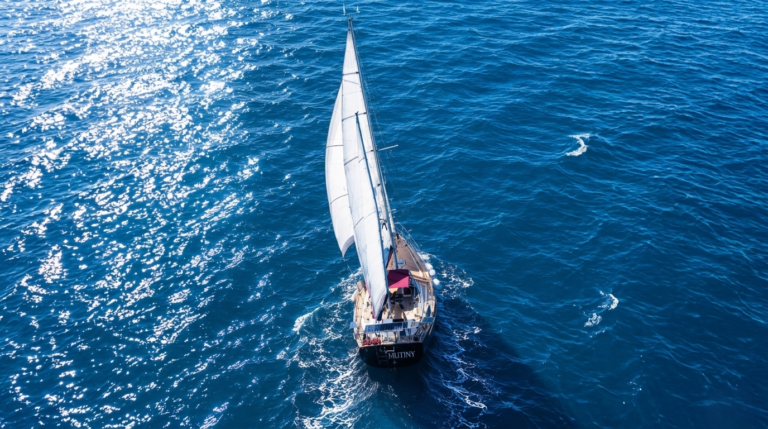
Mutiny didn’t start out as an ocean-crossing machine. Like many cruising boats, she began as a dream, a project, and ultimately one of the most important decisions we ever made when buying a sailboat… After years of living aboard and preparing Mutiny for long-distance cruising, we finally completed our first major ocean passage.
To be honest with you, the headlines would be drawing way more attention if we didn’t make it to the other side. For many centuries, sailors have been “hitchhiking” these trade winds along this very same route towards the same destination. Thanks to the reliable northeast trade winds, thousands of sailors make an Atlantic crossing from Europe to the Caribbean every year. In theory, if you had enough food, water and a floating flamingo, the ocean would eventually carry you west as well.
You don’t earn the satisfaction of an Atlantic crossing by reaching the other side. You earn it by learning how to spend your time and wrestle with your own mind along the way. Instead of paying top dollar for a yoga retreat that forbids talking and punishes you with tiny portions of healthy food, try surrounding yourself with billions of litres of -undrinkable- water and see where your thoughts take you.
Sure, taking in all the shooting stars during the night, listening to the waves gently brushing against the hull, letting your thoughts drift along the tide, and snacking on fresh seafood does occur. But as a lover of sarcasm and being a “balloon popper”, I would like to shine some light on places that struggle to remain hidden.
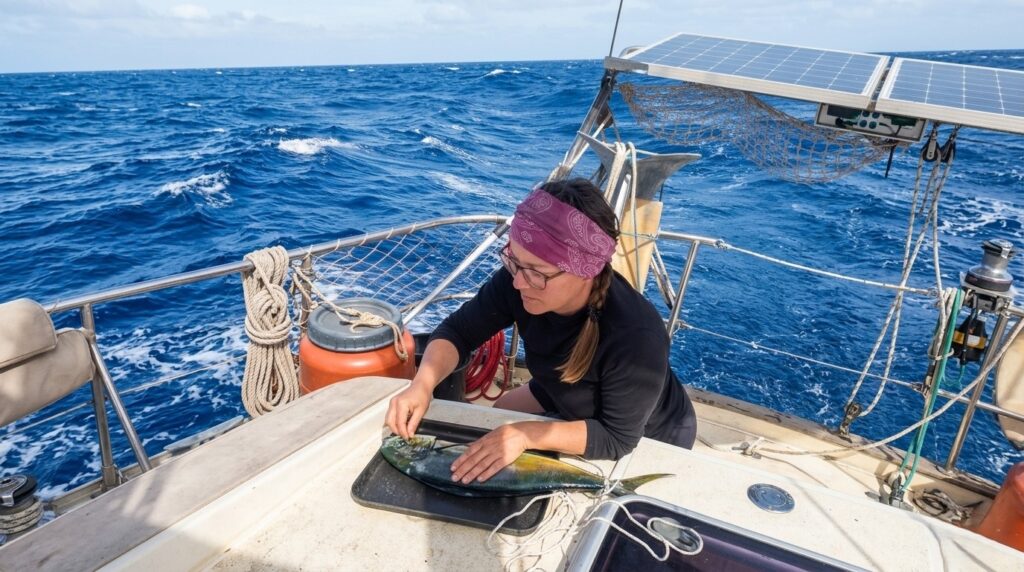
If your boat ain’t breaking, you ain’t sailing
What Broke During Our Atlantic Crossing?
So, what’s the damage? The spinnaker pole, which is extremely useful when sailing downwind, decided to part ways with the main mast. Some heavy gusts and a horrible sea state caused 26 pop rivets to snap clean off the track that holds the 2.5-meter aluminium pole attached to the main mast. Luckily, it happened during daytime when the breeze had settled. The consequences otherwise would have been disastrous.
Next thing to go was our autopilot. Fortunately, our windvane took over and steered us the rest of the way. – If you’re curious about the gear that keeps Mutiny moving, you can find our boat setup here. –
Yes, my dear non sailors, boats have autopilots. Do you really think that people actually steer the boat by standing at the wheel for weeks on end? Those days are over. Lucky for us, we have our windvane that brought us to where we needed to be. The rest hardly seems worth mentioning. The companionway hatch decided to seize up, salt water killed a few electronic devices, and several pieces of clothing have already graduated to oil-rag status.
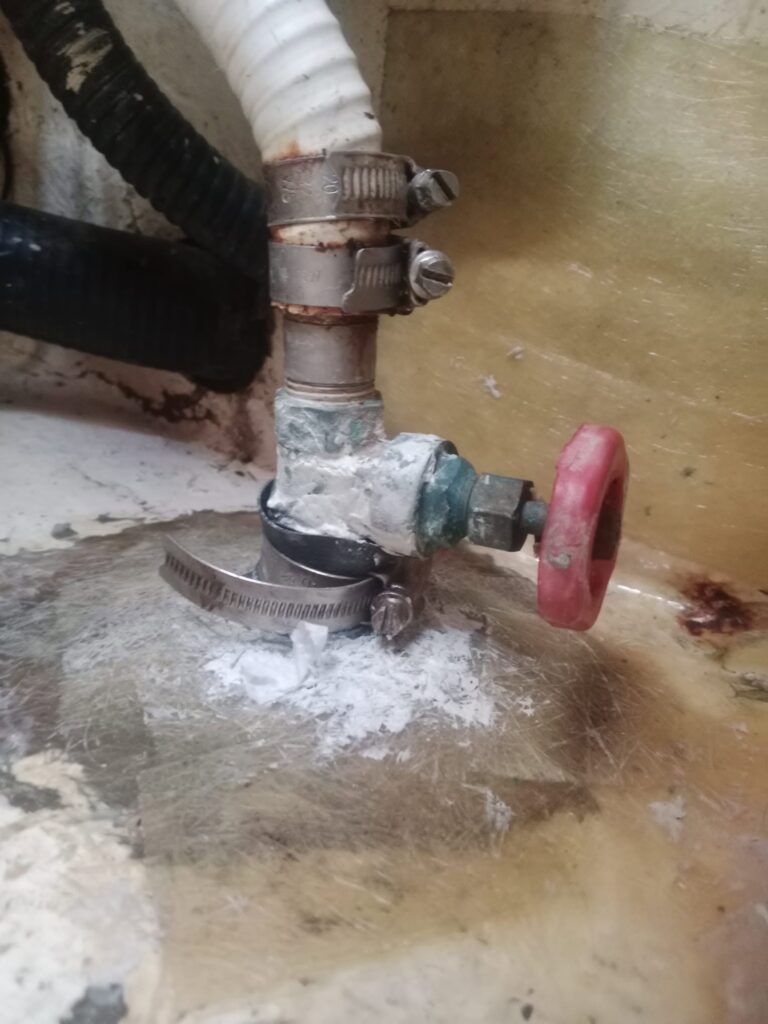
I must say that we are pretty proud of the fact that each time, less stuff is breaking down and that our improvised repairs seem to actually do the job. Sailing is all about fixing your boat in tropical places. The sooner you accept that, the merrier life will be.
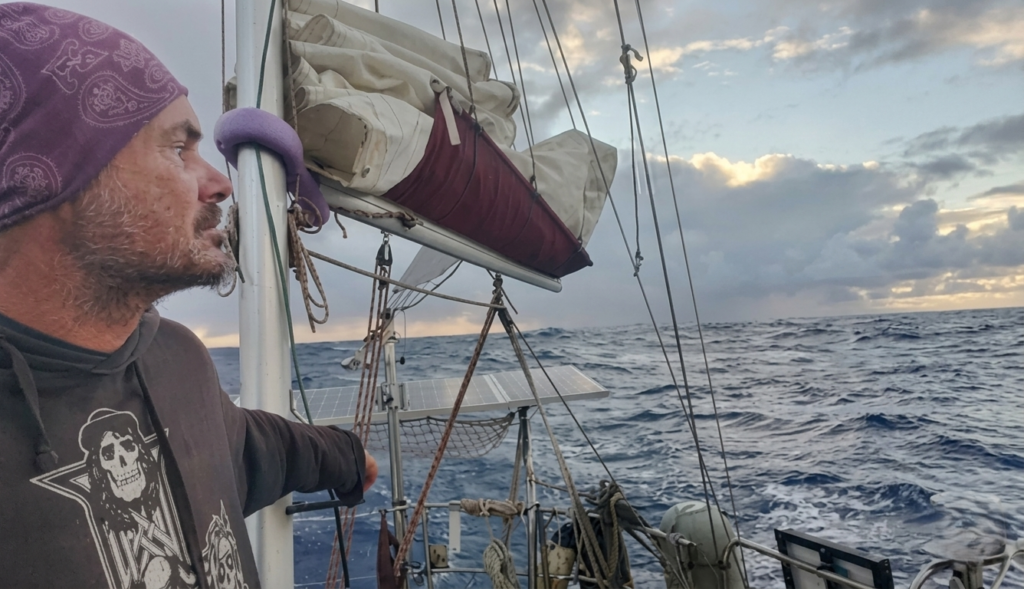
Luckily, it happened during day time when the breeze had settled.
What Is It Really Like Sailing Across the Atlantic?
Sorry to burst your bubble, but that’s a load of BS. Rather than gliding along a long and steady Atlantic swell, we spent weeks wrestling with the short, confused seas that North Atlantic storms had churned up ahead of us. That meant that Mutiny turned into a corkscrewing washing machine, 24 hours a day! Simple tasks like going to the toilet, getting something from the cupboard, reefing a sail, or even scratching your head with your free hand, were simply made impossible. Let alone sleep!
More than a few times, the freshly prepared meal or coffee found its way flying across the saloon, covering bedsheets and walls with remains of all our efforts to lift our already broken morale. Our vocabulary grew with new curses and swearwords, unheard before in even the bowels of hell and unfit for human ears.
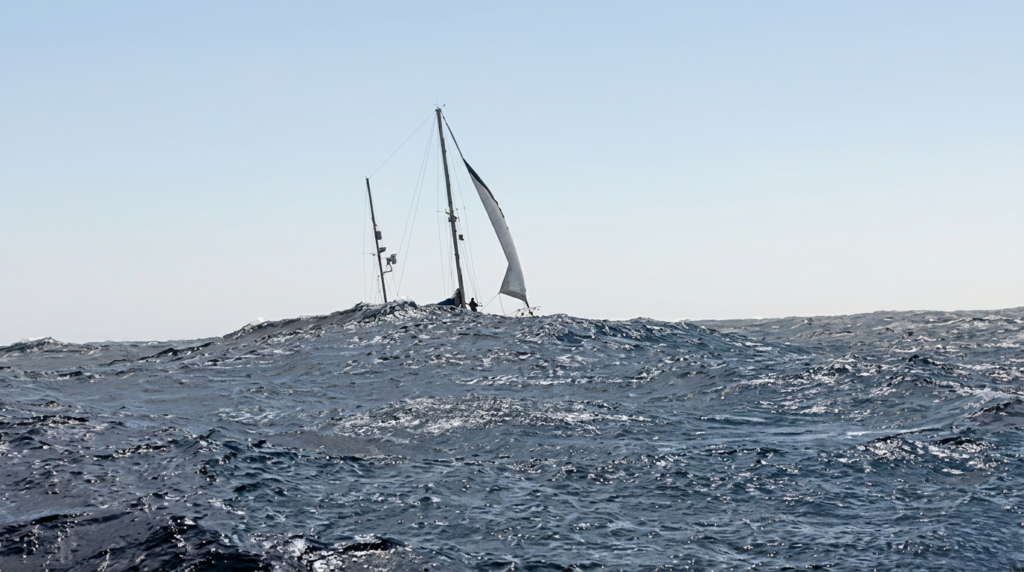
Sailing is all about fixing your boat in tropical places
Crossing the Atlantic with a Boat Cat
Like a champ! This little Greek feline managed to cross 8 time zones with us (from Türkiye to here), and still manages to pinpoint 17:30 local time to remind us of his dinner time. Although he feasted daily on half a dozen flying fish that washed up on deck, he still managed to gobble up huge amounts of snacks and treats to keep him occupied.
Even after throwing up his entire stomach contents all over the boat, he still managed to stuff himself with even more flying fish as they reappeared on the boat. It was as if Mutiny had turned into a giant cat buffet and Styx was like a cocaine-fuelled Tasmanian devil, racing against the clock to devour as many sea creatures as possible within a few minutes.
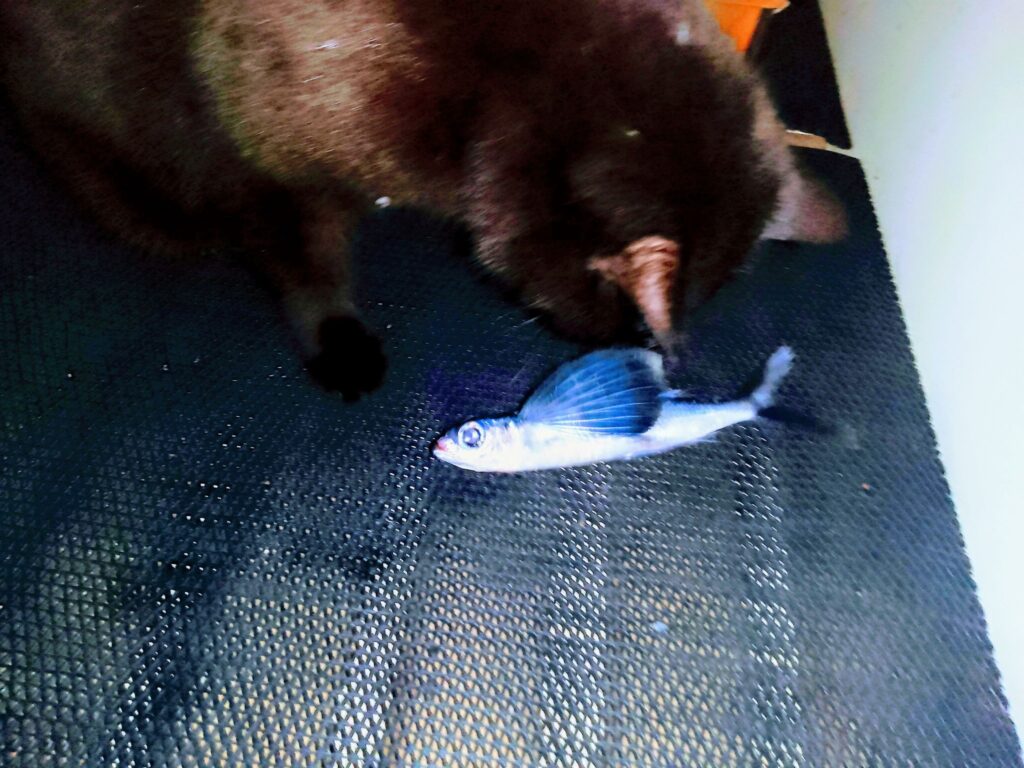
Coffee found it’s way flying across the saloon
Was it Scary?
A topic not easily addressed by those who go out to sea, but one that is definitely gnawing at the back of your mind when the pitch-black night falls, the wind is howling and there is no land in sight for weeks. We deliberately sail Mutiny without much of the “safety gear” that lawmakers and sensible people tend to sleep better with.
This might sound a bit irresponsible to some of you, but to tell you the truth, speeding down a highway at 130 kilometres an hour with thousands of emotionally unstable strangers driving little metal boxes sounds to me like a daily form of Russian roulette that seems to be totally acceptable in daily life.
Styx was like a cocaine-fuelled Tasmanian devil
Even the best boat buddies have their limits 😅
Lucky for us, we had a “buddy boat” accompanying us. Another great couple who were heading the same way and who would be in radio contact with us all the way from A to Z. Well…they made it until C. After three days, they pointed their bow south and sailed away, choosing speed over staying within radio range of our notoriously slow Mutiny. Don’t get me wrong, we don’t blame them at all. We are slower than slow. Mutiny is about as slow as a stoned turtle swimming backwards against the tide when it comes to downwind sailing.
The major downside was our lack of daily weather forecasts that we had been receiving via radio from them. Using Starlink (roaming internet), they kept us informed with detailed weather forecasts throughout the crossing. The last news from our buddy boat contained word that they were heading a few hundred miles south to avoid a huge high–pressure system coming in from the west, consisting of near-gale-force winds with 4-meter waves with 4-second intervals. “If you continue heading West, you will get pounded”.
Then, they raised their sails and disappeared out of contact, heading South towards Brazil. We pointed our bow in a direction that suited Mutiny far better and increased her speed. We headed West. These squalls bring strong winds that only last for maybe 20 minutes and if you are lucky, you can see or hear them approaching. The good thing about these squalls sneaking up to you from all sides, is the fresh downpour of heavy, much needed, priceless rain it brings.
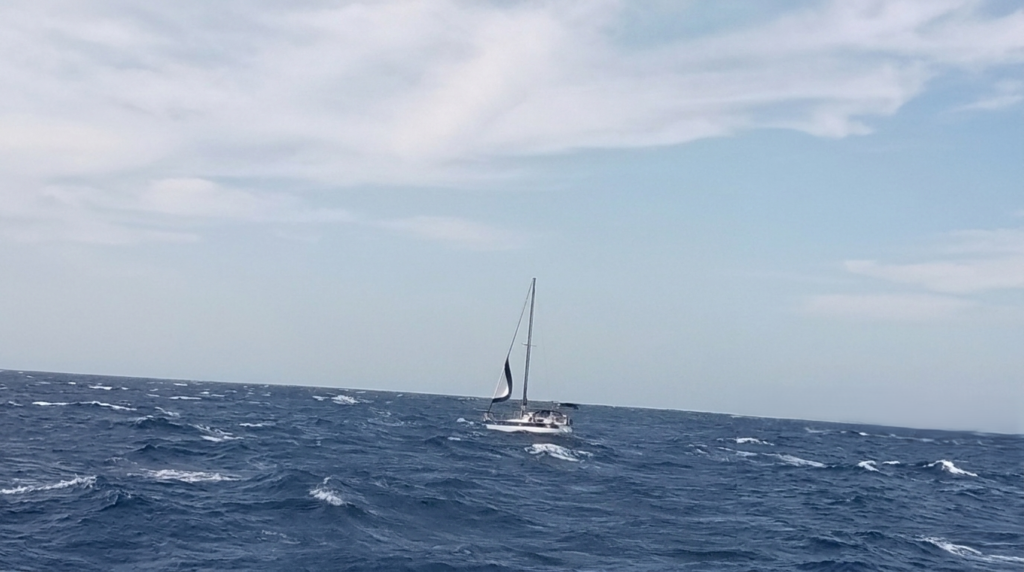
very welcoming squalls.
Weather, Squalls and Storm Avoidance in the Atlantic
Mutiny thrives in close-hauled conditions (very close to the wind) and tackles heavy weather with the confidence of a boat that has done it all before. Our confidence had grown exponentially from dealing with stronger winds and waves. So we prepared our storm sails and buckled up. Dozens of dolphins joined us and raced alongside Mutiny as we headed west. We always consider this to be a very good omen.
A few days later, we reached the area where the storm was going to hit hardest. Instead of getting pounded by the near-gale winds and towering waves the forecast had warned us about, we sailed through a confused sea, a few squalls, and gusts that peaked at 35 knots. These squalls bring strong winds that only last for maybe 20 minutes and if you are lucky, you can see or hear them approaching. The good thing about these squalls sneaking up on you from all sides, is the fresh downpour of heavy, much needed, and priceless rain they bring.
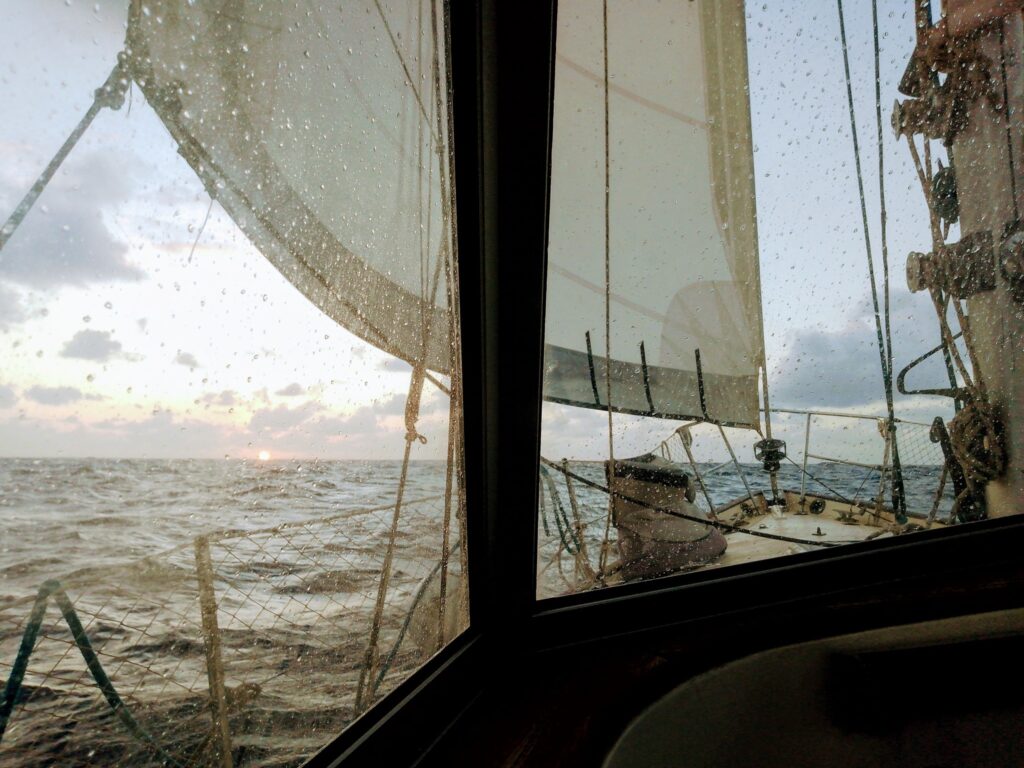
Why Barbados Was Our First Caribbean Landfall
Why Barbados? Simply because it was the first land in sight. It might just as well have been Suriname, Tobago, Guadeloupe, or any other bit of soil with palm trees. For the time being, the Caribbean will be our home until we move elsewhere. Looking back, choosing the right boat played a much bigger role in this crossing than any fancy equipment ever did.
All the islands are relatively close together and there are some great places to discover and explore. As long as we stay clear of the hurricane season in the northern parts of the Caribbean, starting around June, we will be on the move almost constantly. Now it’s time for the usual repairs, scouting for parts, finding ways to finance our lifestyle, and enjoying doing so.
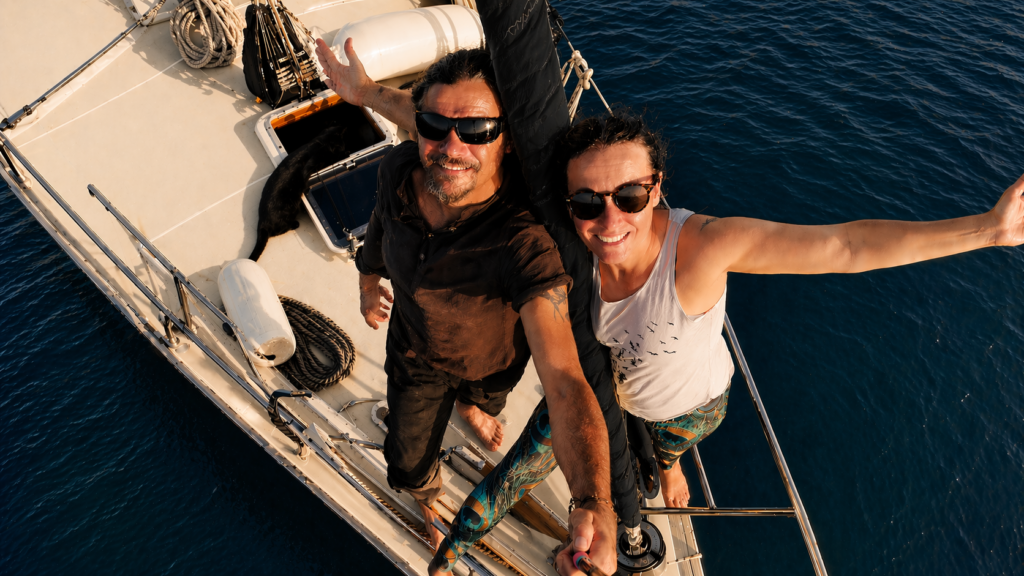
Instead of paying top dollar for a yoga retreat, surround yourself with billions of litres of -undrinkable- water.
Atlantic Crossing FAQ
How long does it take to sail across the Atlantic?
For us, the crossing took 19 days. Most sailors crossing from the Canary Islands to the Caribbean spend between 2 and 4 weeks at sea depending on weather conditions and boat speed.
Is sailing across the Atlantic dangerous?
Like any offshore passage, an Atlantic crossing carries risks. Good preparation, weather planning and a reliable boat significantly reduce those risks.
What is the best route to cross the Atlantic?
Most cruising sailors follow the trade winds from Europe to the Caribbean, often departing from the Canary Islands towards Barbados, Martinique or Saint Lucia.
If you’re planning to buy a sailboat, our sailing ebook, The Right Boat, covers many of the lessons we wish we’d known before starting our liveaboard journey. We also offer a Boat Buyer’s Risk Scan, a pre-purchase sailboat assessment that helps identify potential red flags, maintenance concerns, and costly surprises before committing to a marine survey or boat purchase.
Thank you!
We are incredibly thankful for all the support from those who never stopped believing in us since we started living on a sailboat. You know who you are! We would also like to thank those who always discouraged us and tried to wave our dreams off as if they were idiotic, irresponsible daydreams. Thank you, you encourage us to go that extra mile.
Thanks for taking the time to read this rant and we hope you find your freedom and happiness in whatever you do and wherever you are.
We made it across the ocean and we”re already dreaming of our next crossing, the Panama Canal… which isn’t exactly free.
If you enjoyed the ride, you can keep Mutiny moving.
This is Mutiny, standing by on channel 16…out…