How We Built a Maritime Recruitment Business: Living the Liveaboard Lifestyle
🎙️Prefer listening?
Grab a coffee, go for a walk, or sit back in the cockpit, relax and press play.
We’ve never had a “normal” life. Our journey started with backpacks in Central America, took us through Europe and Asia, and eventually led to buying a sailboat and sailing across the Atlantic to the Caribbean. This is the story of what came after: from burnouts, a failed YouTube attempt, and how we built Mutiny Maritime Recruitment: a recruitment business by sailors, for sailors.
How It Started: Tyrell Bay
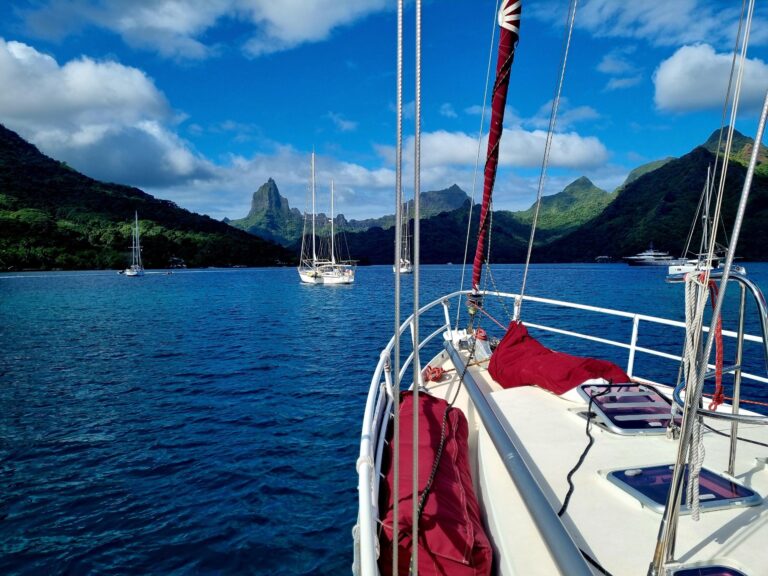
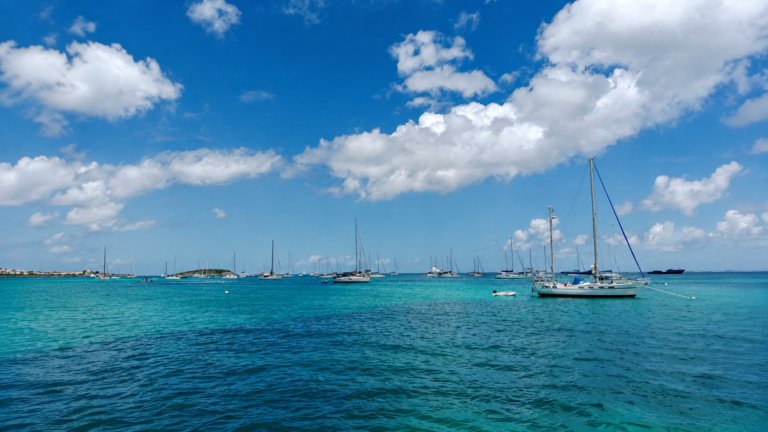
Let’s start with a flashback to 15 months ago. We were lying at anchor in Tyrell Bay, Carriacou, just living the life with some of our closest friends, Alex and Marcus from Jump Up Racing. The conversation drifted to the same old problem: why is it so hard to have an income without giving up the dream of living on the water? And that’s where the conversation about building something for sailors, by sailors, first started.

Life Outside the Box
We’ve never followed a traditional career path, and our life has never been a neat PowerPoint presentation. We spent years trying to survive by adapting to systems that weren’t designed for us, wearing every hat imaginable. From an online casino in Malta to building a remote recruitment business from ground zero in Belgium.
We weren’t just the founders there; we were the entire team, and we learned quickly that when you’re the small player, you’re often treated as a disposable line item. We didn’t have the luxury of a safety net. After a previous employer left us €17,000 short, we learned the hard way that our work had to be as mobile as our home.
We’ve truly been in your shoes: we’ve sent the applications, navigated the scams, and dealt with the anxiety of “stable” jobs evaporating overnight. Eventually, the friction of trying to force ourselves into systems that didn’t fit led to burnout. We were exhausted, physically ill, and disconnected from the life we’d chosen. But that wall we hit gave us the necessary space to breathe and realize the truth: we hadn’t failed at recruitment, we had failed at the way we were doing it.

The YouTube Trap
A few years ago, we gave the YouTube thing a go. It had its moments, but it felt like a trap. When your private life turns into content, you stop experiencing things, you just record them. It’s a strange way to live, always worrying about the camera angle instead of the moment.
We were making peanuts while dealing with a mountain of “expert advice” from people who watched. And Lotte certainly wasn’t about to start walking around half naked just to drive up view counts or fish for donations. We’d seen enough of that world to know it wasn’t for us. That left us standing at the same crossroads, asking: Okay, what’s the next move?
Play to Your Strengths
The question was staring us in the face: what do we do next? We are part of one of the most amazing communities on the planet. We are surrounded by sailors, liveaboards, and marine pros, people who traded comfort for freedom. In order to financially sustain our liveaboard lifestyle, in a digital world we have watched develop from the very beginning, we are running a few experiments. It’s always better not to put all your eggs in one basket.
Besides our Maritime Recruitment business, we’ve created online boat buying guides based on our seven years of experience as full time DIY liveaboards, specifically for newbie sailors and we designed a boat buyer risk scan. Helping buyers avoid the expensive mistakes many first-time sailboat buyers make. We don’t want to sell a fantasy. We aren’t interested in becoming another “get rich on the beach fast” guru whose only real income comes from selling courses about how to get rich. We want to avoid the typical Instagram scams that often operate like pyramid schemes and offer something much more valuable instead.
The Reality Check
By that point, AI wasn’t just a gimmick; it had become part of our routine, as we had been working in SEO content writing1 on and off for a few years. But eventually, AI made our last job redundant. Then, almost out of desperation, we did something a bit unconventional: we dumped our entire lives into it. Our wins, our absolute failures, our business models, our skills, and the raw reality of boat life. We wanted an objective perspective on our own mess. And the answer kept coming back the same:
Recruitment.
Honestly? We didn’t want to hear it. It felt like walking back into a burning building. But the more we crunched the data, the more it clicked. The industry wasn’t the enemy. The problem was the context. We hadn’t failed at recruitment; we had chosen the wrong target audience.
The Missing Bridge
Then Lotte went to work with the riggers onSint-Maarten for a month, and it fell into place. We saw the problem playing out in front of us. The maritime industry is starving for reliable, skilled talent. At the same time, we’re surrounded by sailors and marine pros who are incredibly capable but stuck in the dark when it comes to finding the right gig. Suddenly, the disconnect was obvious. We weren’t just observers; we were the bridge. We know these people, we speak their language, and we know exactly what they’re worth.
Back to Our People
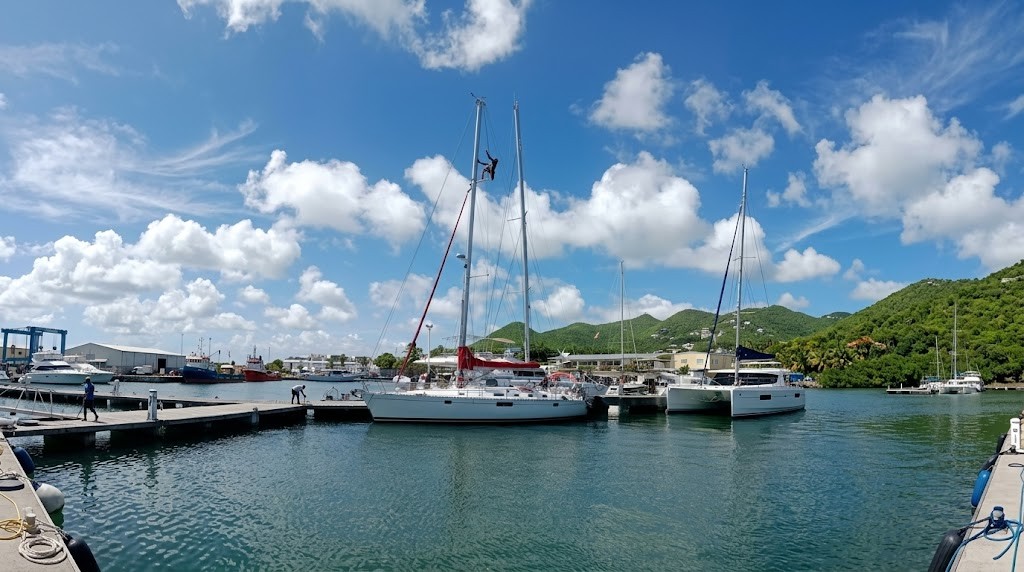
Recruiting for the maritime industry feels like a different universe. We’re finally working with our people. These are folks who know boats, who fix things when they break, and who don’t blink when the stakes are high. And the employers? They’re a breath of fresh air. They don’t just “accept” that we’re remote, they love it. When they say the generator died in the Caribbean, we don’t just write it down; we know exactly what kind of nightmare that is.
It Finally Feels Natural
The crazy thing is, we didn’t head back to recruitment because the daily pressure had lifted. We returned because it finally made sense. When you genuinely love your craft, the sales pitch dies. You stop trying to convince people you’re passionate and just start doing the work. You help people get where they need to go. That energy does the heavy lifting for you.
Believing When It’s Hard
Let’s be clear: we aren’t going to pretend this was easy. Our bank accounts didn’t just get low. They reached the “Oh shit, what the hell are we going to do now?” level, as we described in our blog: How much money do you need to live on a sailboat. It’s all about refusing to fold, and daring to keep going.
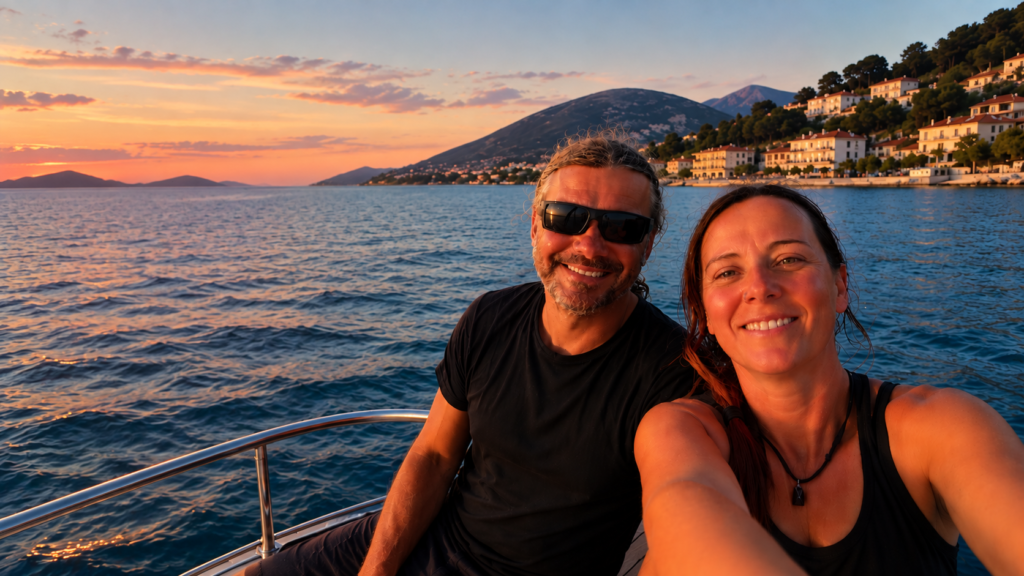
I (Lotte) couldn’t have made this pivot without Ramon. When I had a burnout and was ready to throw in the towel, he was my rock. He pushed through when I couldn’t, and he reminded me of what we were capable of. To the people who are rocks for others: you are the best. We “crash-and-burners” love you, need you, and appreciate you more than we often say. Forget the ‘manifestation’ fluff. The reality is simple: you have to chase the life you actually want, not the one society or your family thinks is ‘safe.’ Be yourself: be-u-ti-full!
We’re Not Done Yet
And that’s exactly why we’re here! We’re here to keep building the life we want, and to help others do the same. For some of you, that might mean finding a way to combine work with the freedom to keep sailing.
Mutiny Maritime Recruitment is picking up speed, and things are finally moving in the right direction! We’ve got some very interesting developments in the works, beyond just recruitment, that we can’t wait to show you. We’re not quite ready to pull the curtain back yet, but trust us: it’s worth sticking around for. Thanks to the ones who’ve been here from the start, and to the new faces: welcome aboard. The story’s just starting.
Looking for your next maritime opportunity in the Caribbean?
Looking for skilled maritime professionals?
Enjoying the journey?
If you enjoy what we’re building, the stories we share, or simply want to support two slightly stubborn people trying to build a life that allows them to keep sailing and generate an income, you can always buy us a beer.
No pressure. No subscriptions. No manifestation course. 😄
Just a beer. 🍻⛵
- What is an SEO Content Writer?
An SEO content writer is a specialized copywriter who creates web content designed to rank high in search engine results (like Google) while remaining engaging and valuable to human readers. Their main goal is to balance search engine algorithms (using keywords, headings, and structure) with the user’s intent, ensuring the text provides clear answers and drives conversions.
↩︎