Working in the Caribbean: A Guide for Maritime Professionals
This guide covers key maritime job markets, relevant technical skills and the work-permit checks to make before accepting a role or planning a move.
The Eastern Caribbean is home to a range of marine businesses, from yacht-service yards and marinas to commercial ports, ship repair and offshore-related operations.
But the region is not one single job market. The type of work available, the size of the marine sector and the rules for working legally can differ from island to island.
At Mutiny Maritime Recruitment, we connect maritime employers with experienced technical professionals across the Caribbean. This guide looks at the main marine job markets in the Eastern Caribbean, the kinds of skills that may be relevant, and what candidates should check before accepting a job or planning a move.
Where are the main maritime job markets?
Sint Maarten and Saint-Martin
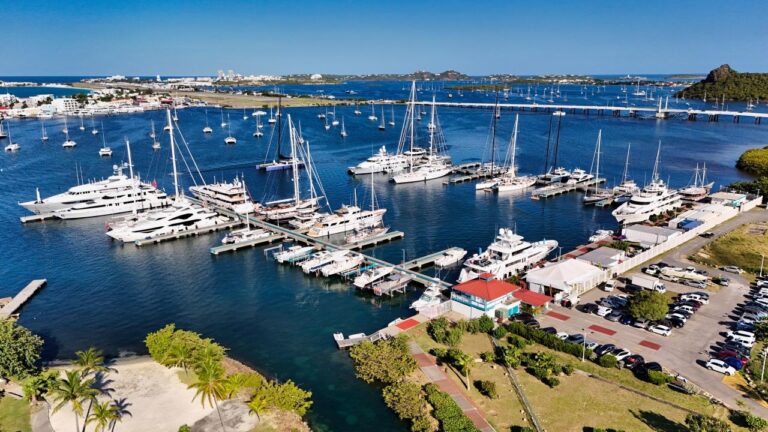
Sint Maarten is an established hub for yacht services, refit work and marine trades, with many of the island’s marine-service businesses based on the Dutch side.

The two sides have different legal systems. The island of Saint Martin is divided between Dutch Sint Maarten and French Saint-Martin. French Saint-Martin is part of the EU; Dutch Sint Maarten is not. EU free-movement rules generally apply to EU citizens on the French side, while non-EU nationals should check the relevant French rules
Dutch and US citizens may find it easier to secure a job on the Dutch side of Sint Maarten, as employers can generally apply for their work permits through a more straightforward process. For candidates of other nationalities, the process can be more complicated and may take considerably longer.
For exceptional candidates with the right skills and experience, employers may be willing to go the extra mile to make the hire happen.
Read more: Maritime Jobs in Saint Martin: Marine Careers & Opportunities
British Virgin Islands (BVI)
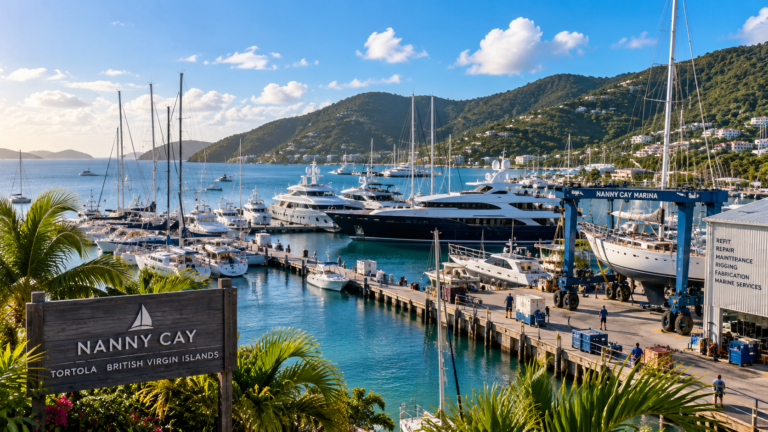
The BVI has a substantial yachting and charter sector, supported by marinas, boatyards and marine-service businesses. Relevant technical roles may include marine mechanics, Mercury outboard specialists, electricians, yacht technicians, riggers, welders and fabricators.
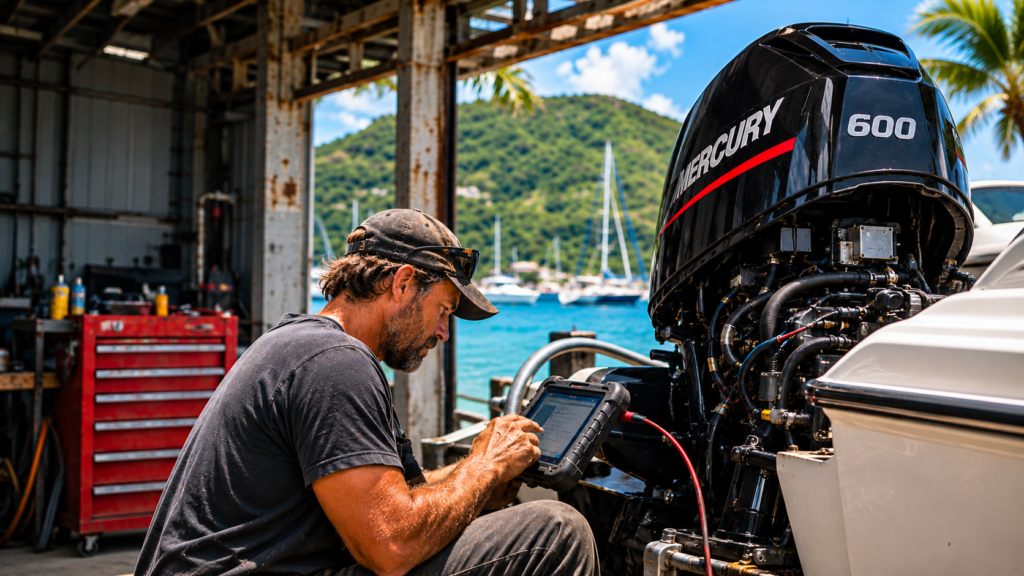
In the BVI, a Belonger is someone legally recognised as belonging to the territory. People who are not Belongers generally need a work permit before taking up employment. The employer must show that the role could not be filled by a qualified Belonger. The government lists a processing time of four to six weeks once all required documents have been uploaded; this is an estimate, not a guarantee.
Read more: Working in the BVI: Jobs, Salaries, Taxes and Cost of Living
Martinique and Guadeloupe
Martinique and Guadeloupe are French EU territories with established marine and yachting activity. EU citizens generally benefit from free movement; non-EU candidates need to check French immigration rules.
Their marinas, boatyards and marine-service businesses may offer opportunities for professionals in yacht maintenance, marine engineering, electrical systems and related trades.
Antigua & Barbuda
Antigua and Barbuda is an independent Commonwealth country. Antigua is a major yachting destination, with marinas, boatyards and marine-service businesses. The local industry includes services such as marine engineering, electronics, rigging and boatyard work.
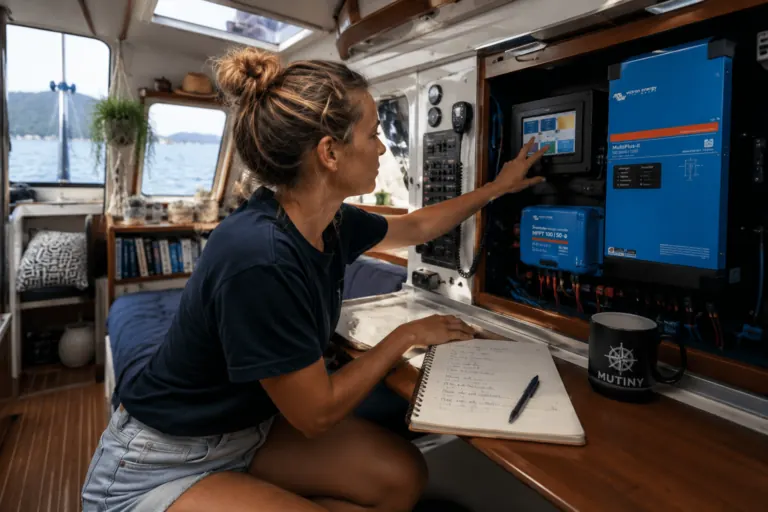
Non-nationals should expect to check local work-permit requirements. In 2026, the government reiterated that employers seeking permits must advertise vacancies and demonstrate genuine efforts to recruit qualified Antiguans and Barbudans first.
At Mutiny Maritime Recruitment, we’re already in contact with employers across the Eastern Caribbean and regularly share maritime opportunities as they become available. Browse our current vacancies.
Don’t see the right role? Join our talent pool so we can consider you for future opportunities.
US Virgin Islands: St. Thomas, St. Croix and St. John
The US Virgin Islands have a marine and yachting sector, particularly around St. Thomas and St. Croix. Potential areas of work include yacht maintenance, charter support and marine services.
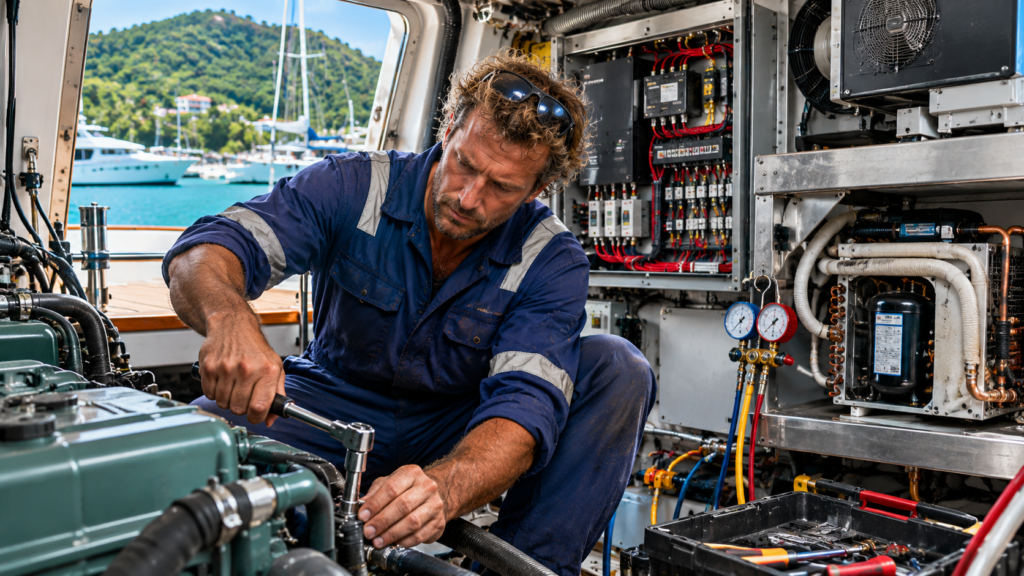
US citizens have the right to work in the US territories. Candidates of other nationalities must confirm that their US immigration status allows them to work. Do not assume that permission to visit the territory also gives permission to take up employment.
Saint Lucia
Saint Lucia is an independent country where English is the official language. Foreign nationals, including British citizens, generally need a work permit or an applicable exemption to work there. Saint Lucia has established yachting activity, including marinas at Rodney Bay, Marigot Bay and Soufrière.
This makes it relevant to candidates with experience in yacht maintenance, marine engineering, mechanical repairs and related trades.
Grenada
Grenada is an independent country within the Commonwealth and a well-established cruising and yachting destination. It is particularly popular during hurricane season, thanks to its sheltered anchorages, often referred to as “hurricane holes.” Its marinas, boatyards and marine services make Grenada a useful base for experienced marine technicians and tradespeople.
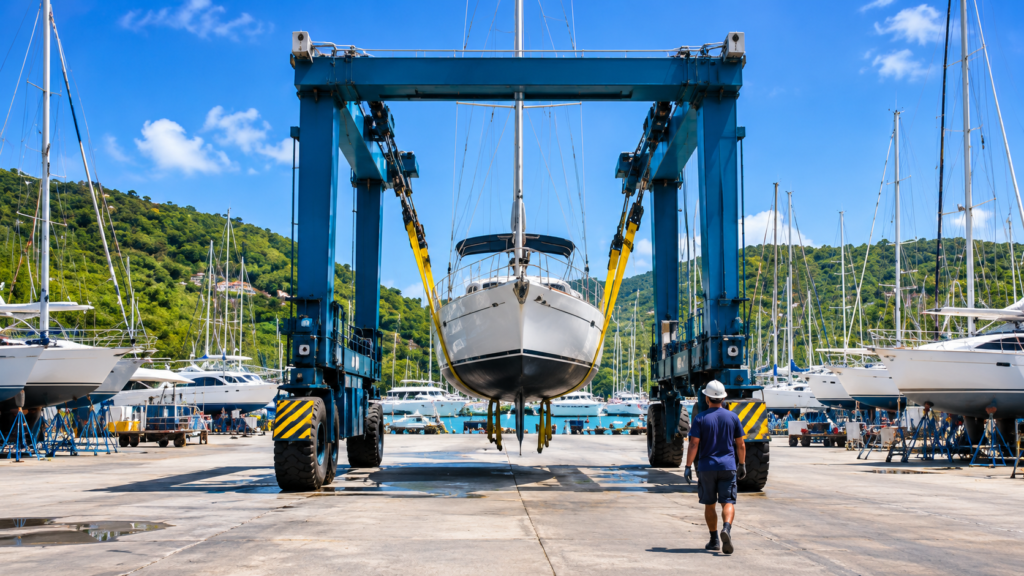
Foreign nationals generally need a work permit. Exemptions apply to some OECS citizens and CARICOM Skills Certificate holders. Candidates should confirm their eligibility and permit requirements with their employer or Grenada’s Labour Department before making relocation plans.
Trinidad & Tobago
Trinidad & Tobago is worth including, but it is a different kind of maritime market. Alongside yachting, the country has a developed leisure-marine service sector, including yacht repair, maintenance, storage, boatyards and marinas. It is also relevant to candidates with commercial-vessel, ship-repair or offshore-related experience.
Non-nationals should check the current work-permit rules before accepting employment. CARICOM free-movement arrangements apply to eligible categories and participating states; they do not automatically cover every nationality or every job.
Other islands in the Eastern Caribbean
There is maritime activity on other islands, but the number and type of opportunities for specialist yacht-service and technical roles can vary considerably.
- Saint-Barthélemy: A distinct legal situation. Do not assume that the same employment rules apply as in Martinique or Guadeloupe. Candidates should confirm the local requirements with the relevant authority.
- Barbados: A relevant maritime and boating market. The availability of specialist yacht-service roles depends on the employer and position. Learn more.
- Dominica, Saint Vincent & the Grenadines, Montserrat, Saba and Sint Eustatius: These islands have maritime activity, but they should not automatically be treated as equivalent in scale to the region’s larger yacht-service hubs. Sint Eustatius, for example, has industrial maritime activity associated with oil storage and transshipment, which is a different labour market from yacht repair.
The list is not a promise that vacancies are currently available on every island. Check the current vacancy details and the employer’s location before making plans.
Which maritime skills may be useful?
Employers’ needs vary by island and business, but practical experience can be relevant in areas such as:
- Marine mechanics and diesel engines
- Marine electrical systems and electronics
- Hydraulics and marine systems
- Welding, fabrication and metalwork
- Yacht maintenance, refit and repair
- Rigging and other specialist marine trades
- Commercial-vessel maintenance and technical operations
Employers may value people who can diagnose faults, work independently and contribute safely in a practical environment. Relevant qualifications, documented experience and clear references help candidates demonstrate what they can do.
Work permits: what candidates should check
A key point for anyone considering maritime work in the Eastern Caribbean is that the right to visit an island is not the same as the right to work there.
Before accepting an offer or paying for travel, confirm:
- Which jurisdiction the job is actually based in.
- Whether your nationality and current immigration status allow you to work there.
- Whether the employer will arrange or support the required work authorisation.
- Which documents, qualifications and references are required.
- Whether the job offer depends on permit approval.
Work-permit rules and processing times can change. This article is a general guide, not legal advice. Candidates and employers should confirm the current requirements with the relevant government authority before making employment or relocation decisions.
At Mutiny Maritime Recruitment, we work with employers to clarify work-permit requirements and the arrangements available for each role.
Looking for maritime work in the Caribbean?
We’re Ramon and Lotte, full-time sailors who live, work and sail aboard Mutiny while building our own business at sea: Mutiny Maritime Recruitment. We connect maritime employers across the Caribbean with experienced technical professionals ready to get to work.
Ready for your next move? Explore our current maritime jobs and find your next opportunity in the Caribbean. Not looking just yet? Join our Talent Pool and hear about future opportunities.

If you work in marine mechanics, marine electrical, diesel engines, hydraulics, fabrication, welding, rigging or another technical marine trade, you can join the Mutiny Candidate Pool and tell us about your experience, availability and preferred locations.
Employers looking for experienced marine technicians and tradespeople can contact Mutiny Maritime Recruitment to discuss their hiring needs.
Fair winds and following seas from the mutiny crew!