🌶️ Making Kimchi on a Rolling Sailboat
Fermenting Kimchi on a Rolling Sailboat – Why Not?
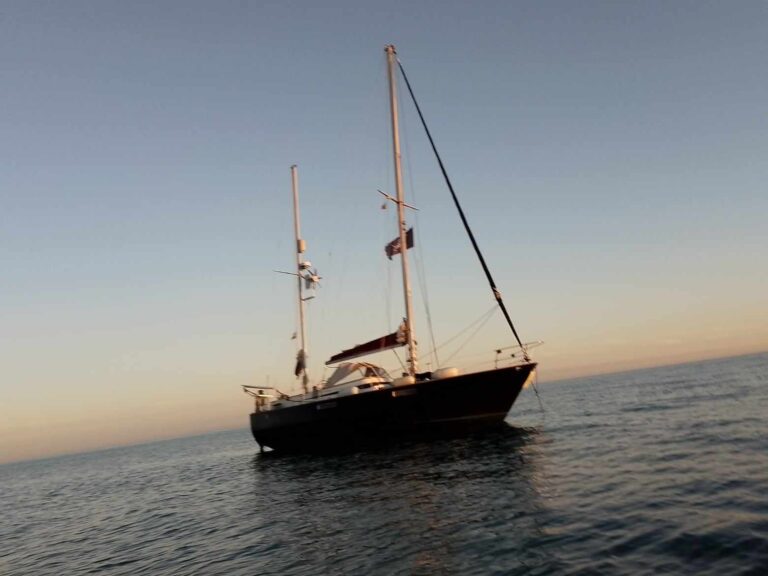
That’s exactly what I thought when I started the fermentation on a flat anchorage. One hour later, a steep, short 2-meter swell kicked in and Mutiny (our lovely floating home) started to roll fast from toerail to toerail.
According to the weatherman Brian Shields; the most dedicated weatherman I have ever seen! When we first arrived in Sint-Maarten, there was an earthquake in the BVI, just north of us. We were anchored up on the north side of Sint-Maarten, which explains the big swell that was coming in from the north, northwest.
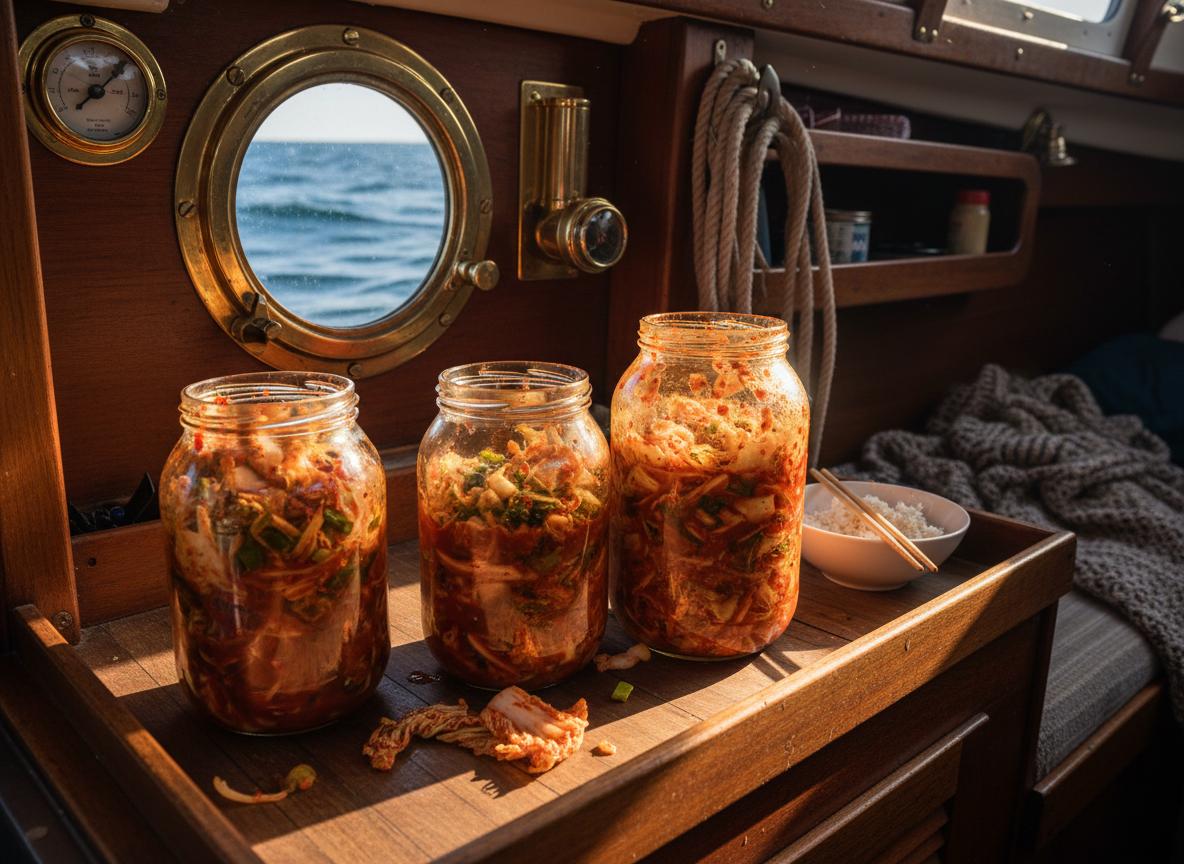
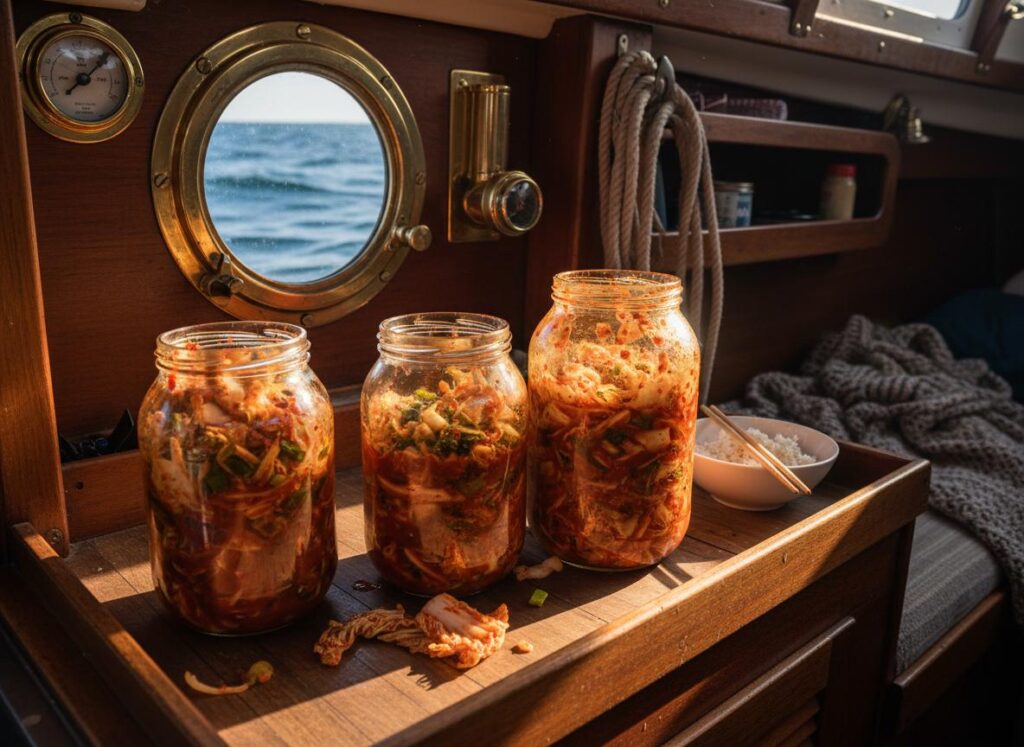
To get my attention off the violent roll and because we had some napa cabbage left over, I started to make kimchi. I needed some distraction from the rollercoaster ride the boat turned into. Rollercoasters are fun because they only last a few minutes. When this time extends to 48 hours, then it becomes a waiting game in which you try not to lose your head.
Back to the kimchi recipe 🙂
Classic Kimchi Recipe
⏱️
Prep Time:
30-45 minutes + 2-5 days fermenting
🥣
Servings:
About 1 liter of kimchi
🌶️
Difficulty:
Intermediate
🛒 Ingredients
1 medium napa cabbage (about 1 kg / 2.2 lbs)
¼ cup coarse sea salt
4-6 garlic cloves, minced
1 tablespoon fresh ginger, grated
1 teaspoon sugar
3 tablespoons fish sauce (or soy sauce for vegetarian version)
1-5 tablespoons gochugaru (Korean red pepper flakes) – to taste
4 scallions, cut into 2-3 cm pieces
1 carrot, julienned (optional)
💧Water for brining
Sailing Tip: On a rolling boat, it’s extra important to secure everything! Use non-slip mats under your bowls and make sure your fermentation jar is well secured or placed in a safe spot where it can’t tip over.
👨🍳 Instructions
🥬Prepare the cabbage: Cut the napa cabbage into quarters and remove the hard core. Cut into pieces of about 5 cm (2 inches).
🧂Salt the cabbage: Mix the cabbage with sea salt in a large bowl. Massage the salt well into the cabbage. Add water until the cabbage is just covered. Let sit for 2-3 hours, turning every hour.
🚿Rinse: Rinse the cabbage thoroughly 3 times under cold water. Drain in a colander for about 20 minutes.
Make the paste: In a small bowl, mix the garlic, ginger, sugar, fish sauce, and gochugaru into a paste.
🥣Mix everything: Add the scallions and carrot to the cabbage. Add the paste and mix everything well with your hands (use gloves, you’ll thank me later :).
🫙Pack it up: Pack the kimchi tightly into a glass jar or fermentation crock. Press down firmly so the liquid comes above the vegetables. Leave 2-3 cm (1 inch) of space at the top.
⏳Ferment: Close the jar (not completely airtight) and let it sit at room temperature. Taste after 2 days. For more sour kimchi, let it ferment for 3-5 days.
❄️Store: Once the kimchi reaches your desired flavor, store in the refrigerator. It will keep for months!
💡 Pro Tips
Always use clean hands and clean materials to prevent contamination
The kimchi may bubble during fermentation – this is normal!
Place the jar on a plate to catch any overflow
The warmer the environment, the faster it ferments
On a boat: find a stable spot away from direct sunlight
Rollercoaster Fermentation: During our 48-hour swell, the kimchi fermented perfectly! The constant movement actually helped mix everything very well.
Who knew that an earthquake would contribute to the perfect kimchi?
🍽️ Serving Suggestions
As a side dish with fried rice
In a kimchi jjigae (Korean stew)
On a grilled cheese sandwich
Straight from the jar with a bowl of rice (sailor style!)
In ramen noodles for extra flavor
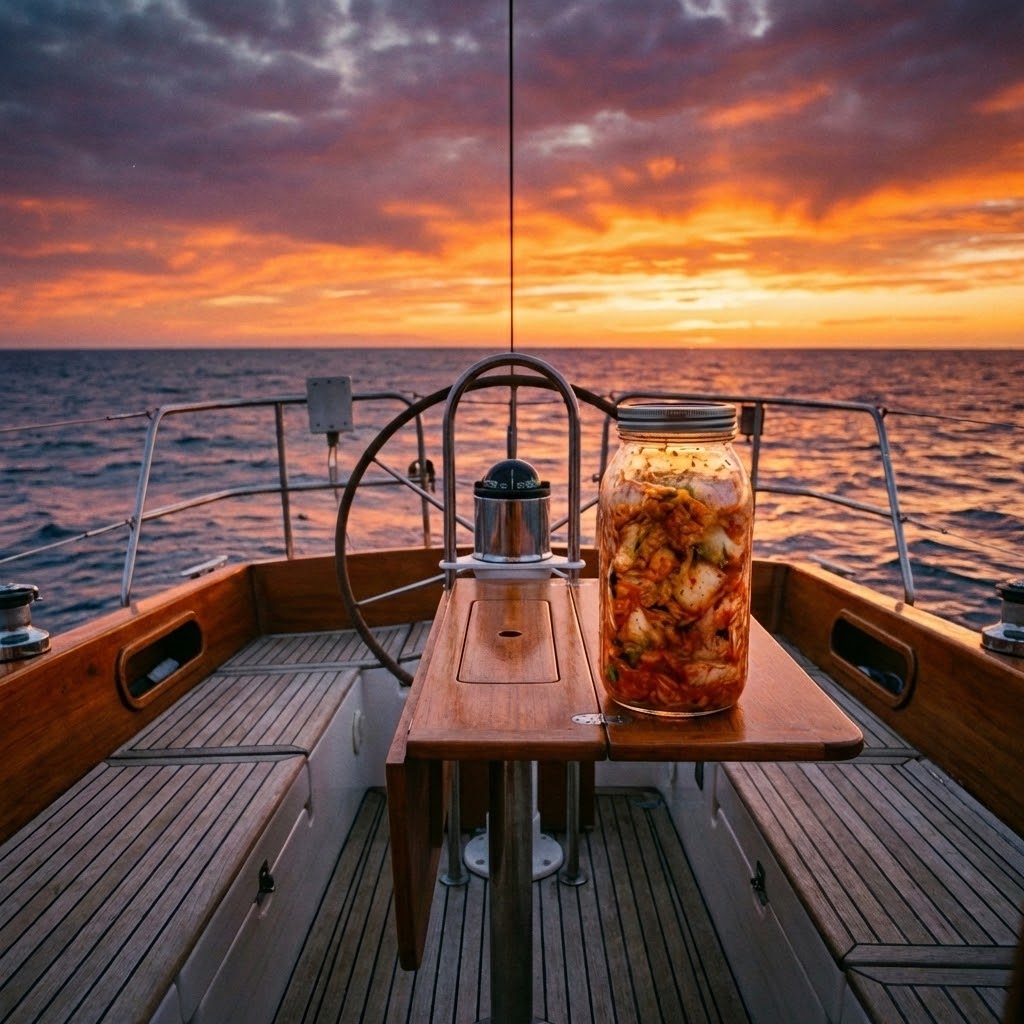
⛵ Made with love (and a bit of rollercoaster action) aboard Mutiny
Sint-Maarten • Caribbean Sailing Life